Ception Health
Product
B2B, B2C, Health Tech
Skills
User Research , Workflow Optimization, Complex Data Visualisation, Interaction Design, Design System
Platform
Web App
Tools
Figma
Date/Timeline
December 2021
VIEW LIVE
I led the design of the Diagnostic Triage & Collaboration Platform for Ception Health—a system built to address the critical shortage of radiologists in Nigeria. By moving away from a linear "First-In, First-Out" workflow to a priority-based triage system, we enabled faster diagnosis for critical patients and seamless remote consultation for complex cases.
The Problem
The "FIFO" bottleneck is costing lives.
In Nigeria, the ratio of radiologists to patients is critically low. Diagnostic centres operate on a traditional "First-In, First-Out" (FIFO) model, where scans are reviewed in the order they arrive.
This creates a dangerous bottleneck: a critical trauma patient might wait hours while a routine check-up is being analysed. Furthermore, when a general radiologist encounters a complex case (e.g., Neuro or Pediatric), finding a sub-specialist for a second opinion often involves fragmented tools like WhatsApp or email, breaking the clinical workflow.
The Challenge: How do we help doctors identify the most urgent cases instantly and connect with remote specialists without leaving their diagnostic environment?
Research & Discovery
Operational Inefficiencies
I conducted on-site observations and interviews with radiologists and hospital administrators to map the current workflow.
1. Blind Queues
Pain Point: "I open folders blindly. I don't know if the next patient is an emergency until I read the referral note."
Insight: Doctors need a "God's Eye View" of the queue, sorted by clinical urgency, not just timestamp.
2. The Referral Maze
Pain Point: Scans arrive from multiple sources—direct patient uploads, partner hospitals, and diagnostic centres—often with varying levels of data quality.
Insight: The system must explicitly categorise the Origin of the request to help doctors understand the context immediately.
3. Collaboration Friction
Pain Point: "If I need a Neuro opinion, I have to take a photo of the screen, WhatsApp it to a colleague, and wait."
Insight: Collaboration needs to happen inside the DICOM viewer, in real-time, to be effective.
The Solution
A Capacity-Aware Diagnostic Operating System
I designed a unified workspace that combines Intelligent Triage with Real-Time Collaboration.
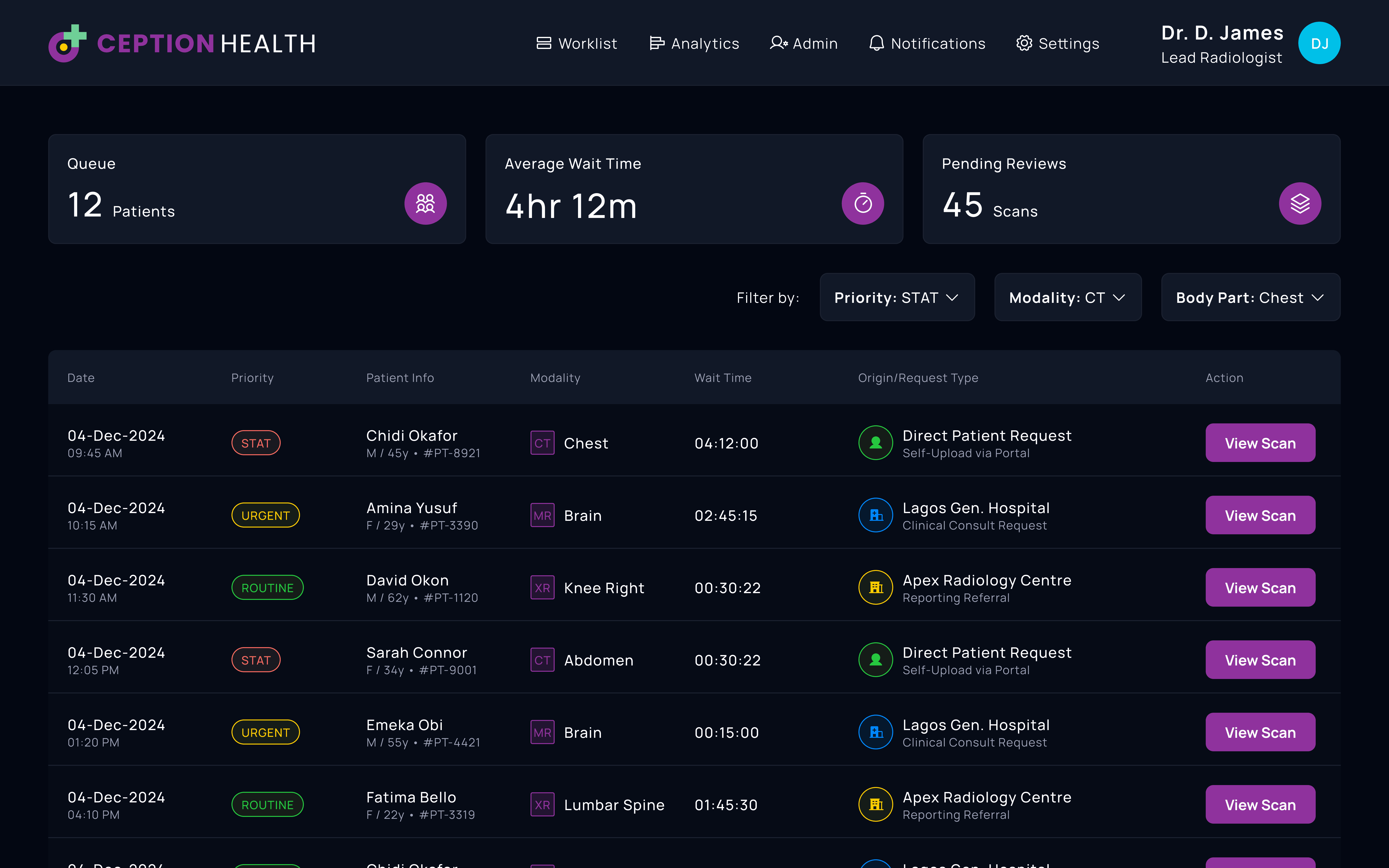
1. The Smart Triage Dashboard
The Goal: Ensure critical patients are seen first. The Design: I replaced the standard folder grid with a data-dense Intelligent Worklist.
Visual Priority Tags: "STAT" (Emergency), "URGENT", and "ROUTINE" tags allow for instant visual scanning.
Wait-Time Awareness: A dynamic "Wait Time" column highlights SLA breaches (e.g., "SLA Breach in 48m"), prompting immediate action for neglected cases.
Advanced Filtering: A robust filter bar allows doctors to slice the queue by Modality (CT, MRI) or Body Part, enabling "batch processing" of similar cases for efficiency.
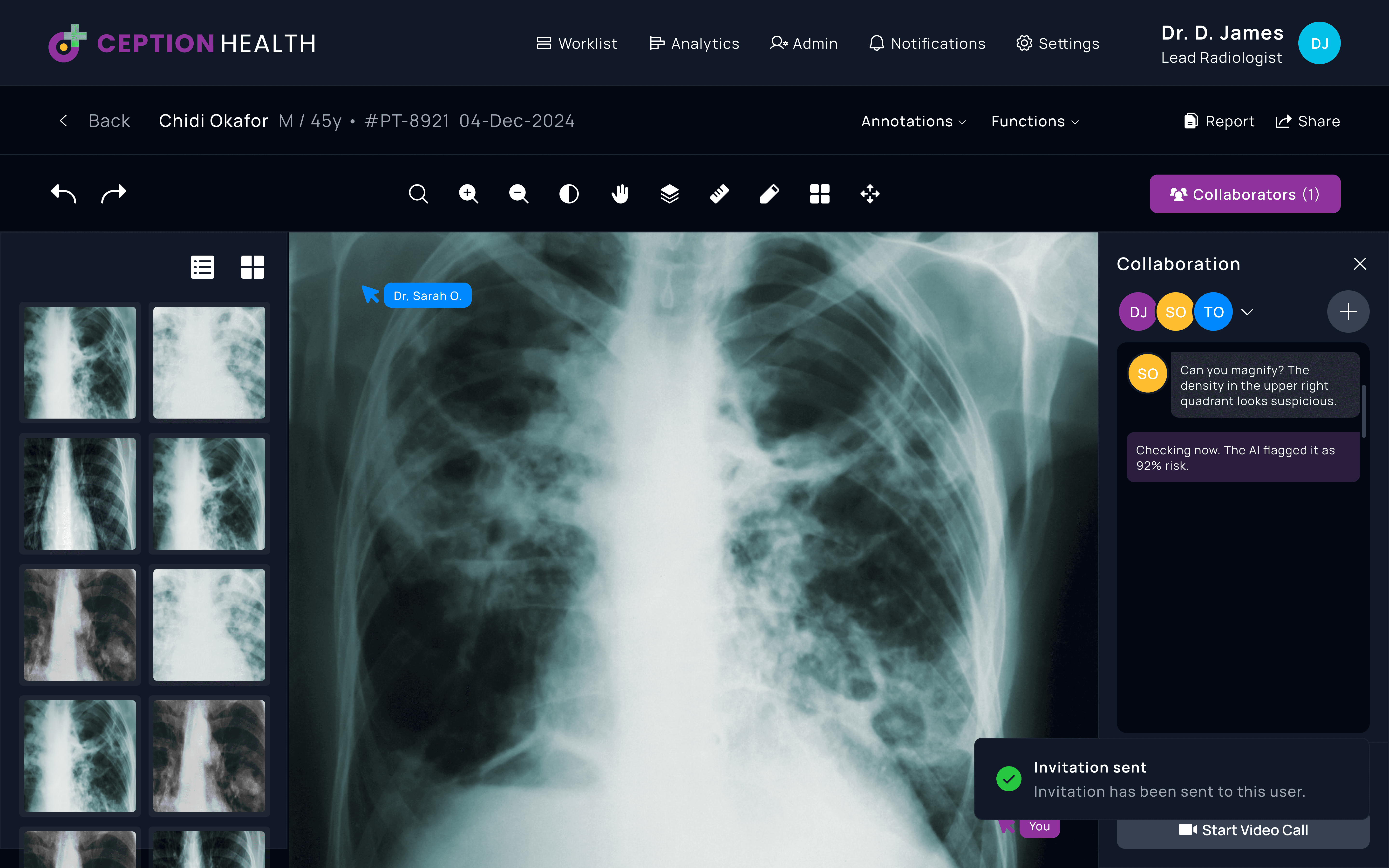
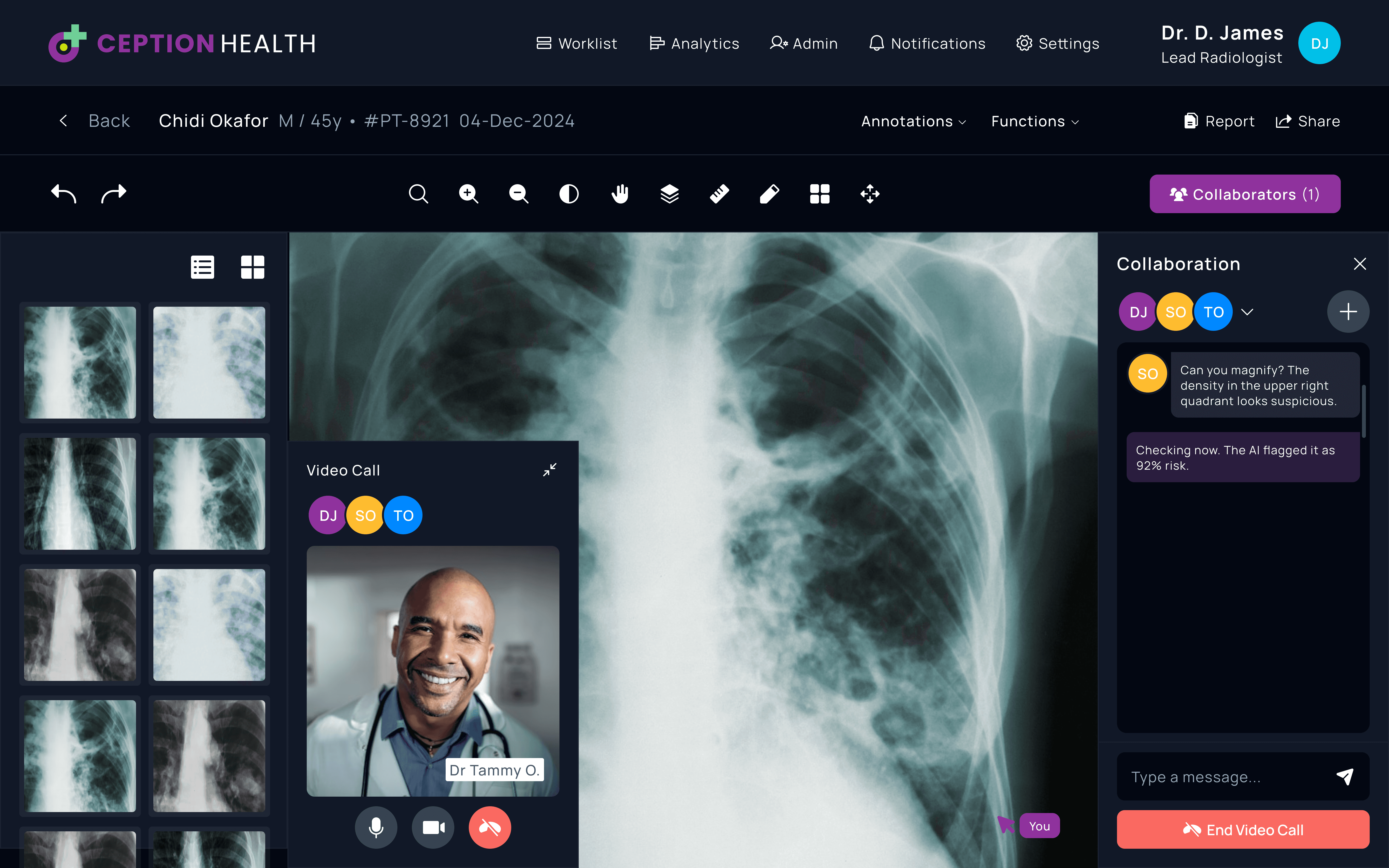
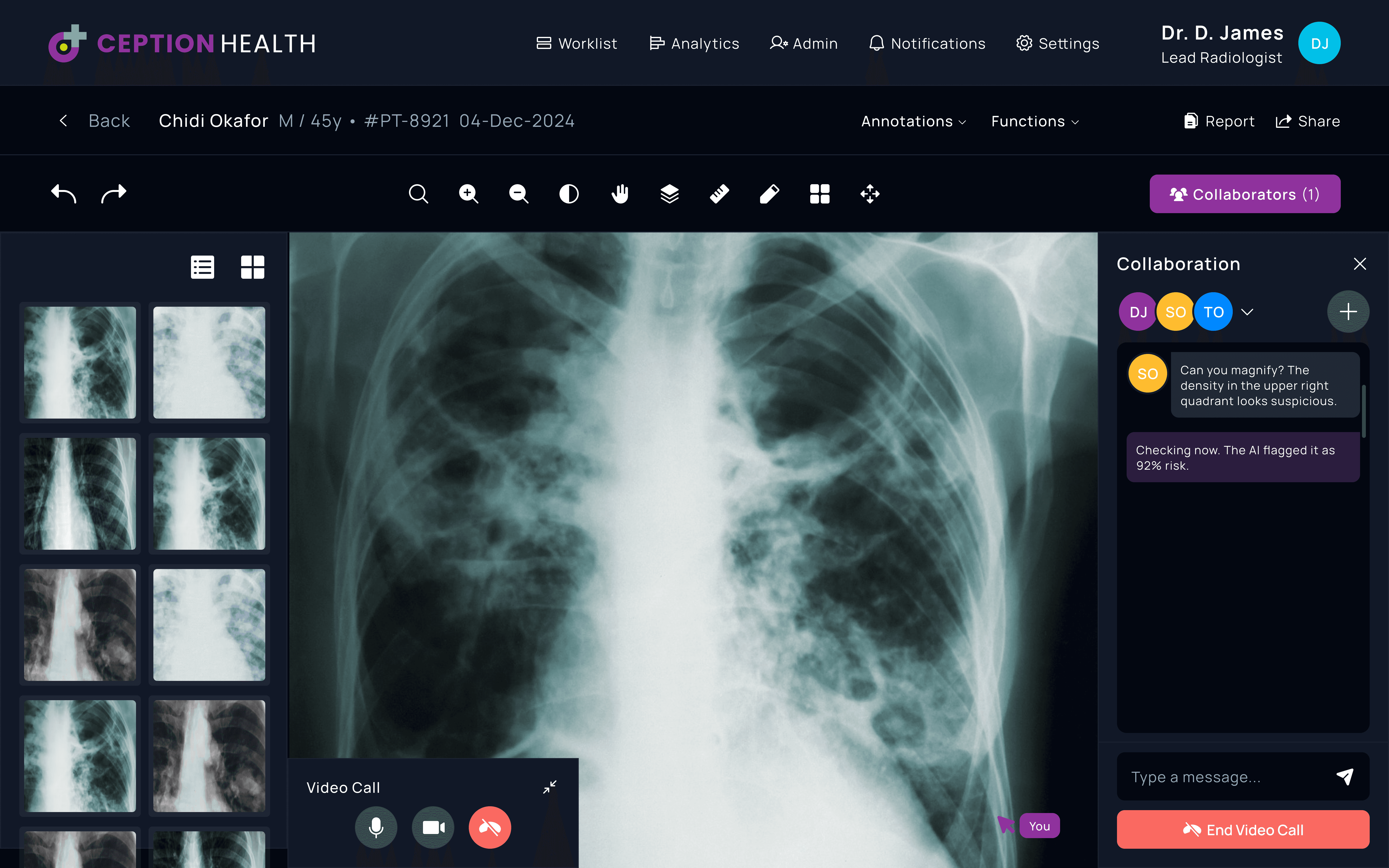
2. The Collaborative Viewer ("Live Sync")
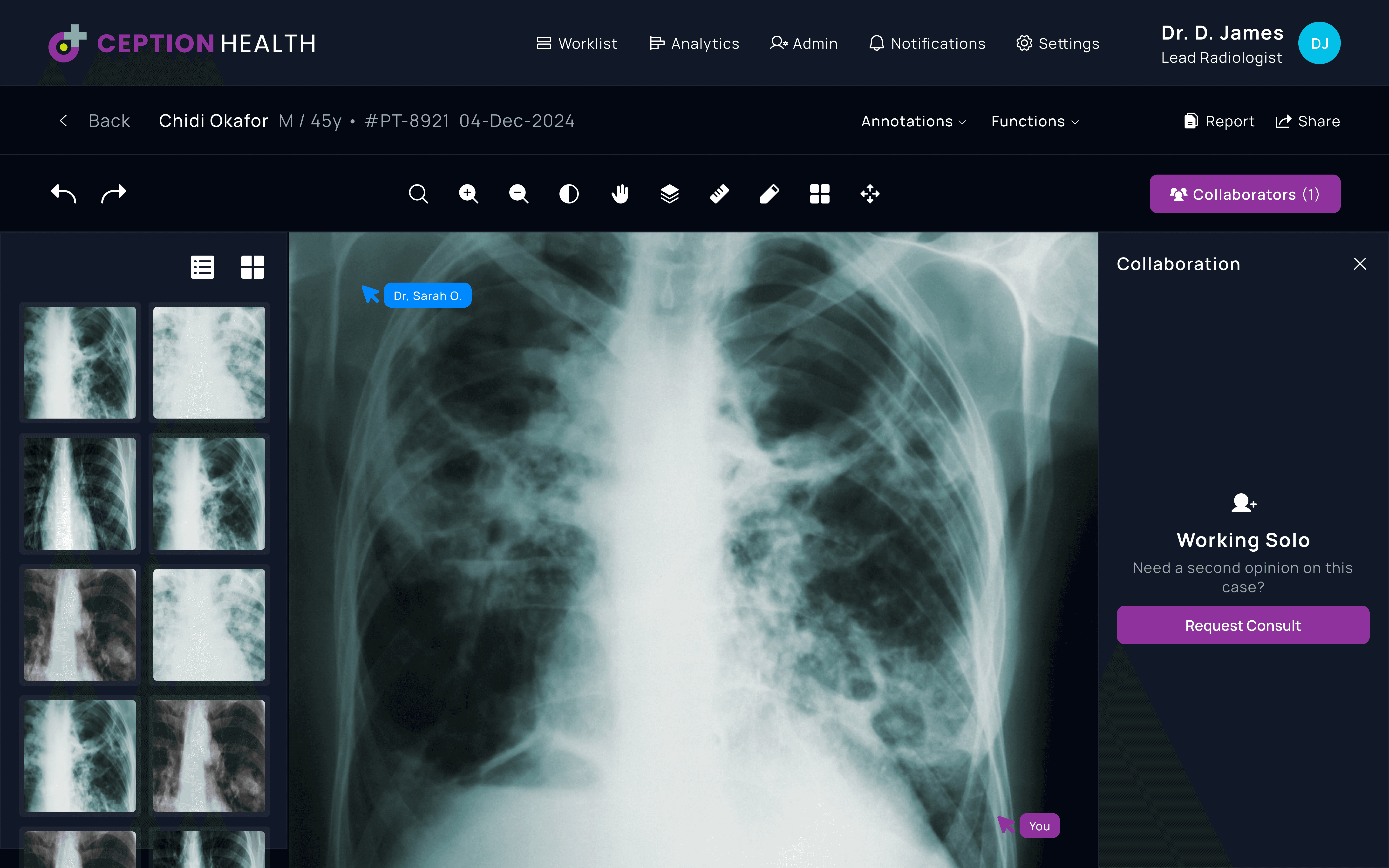
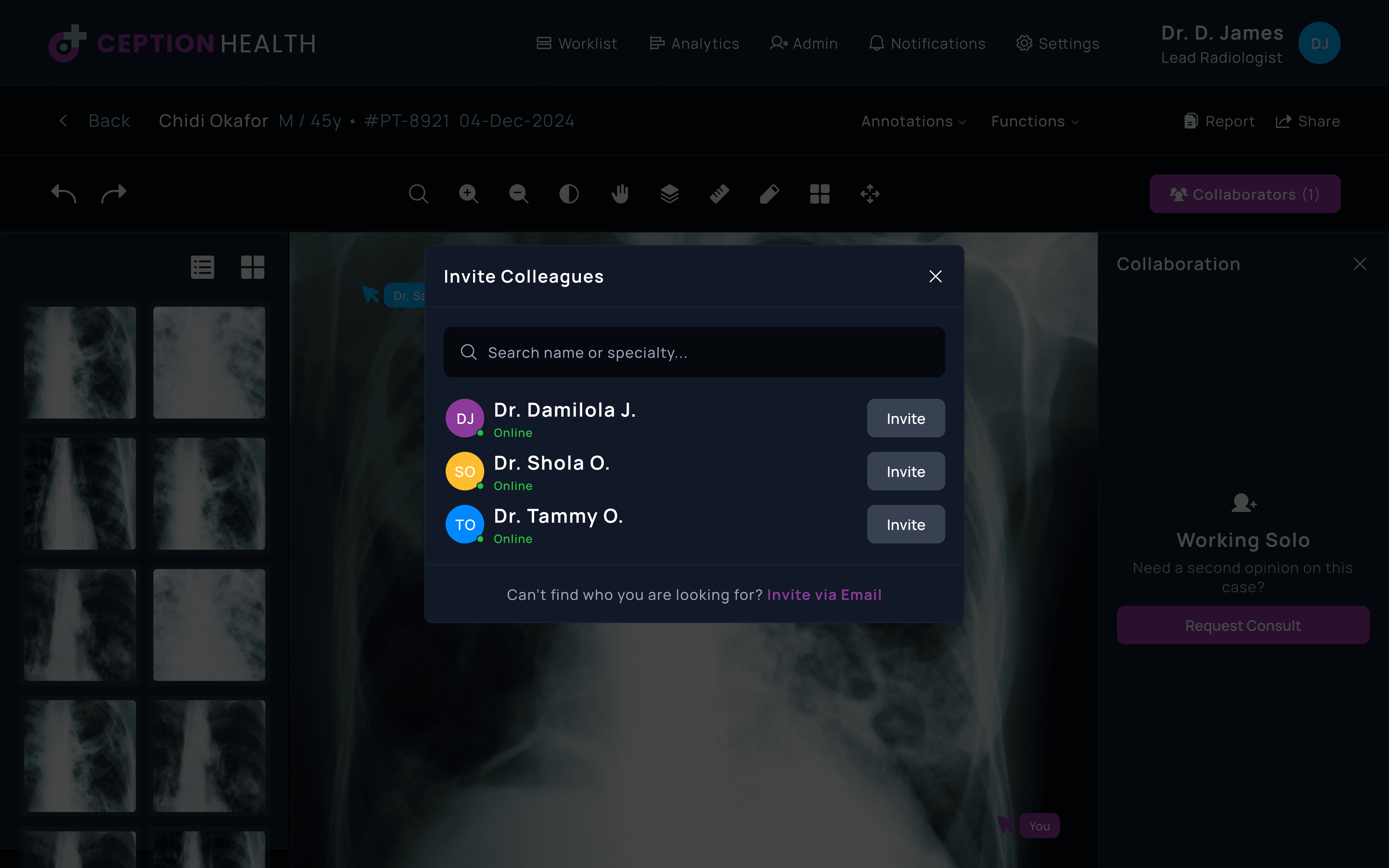
The Goal: Democratise access to sub-specialists. The Design: I built a "Google Docs-style" collaborative layer on top of the standard DICOM viewer.
Live Session: When a specialist joins, their presence is indicated by a green "LIVE SESSION ACTIVE" badge.
Cursor Mirroring: Remote cursors are visible in real-time, allowing doctors to point at specific pathologies simultaneously.
Integrated Consults: A "Start Video Call" feature launches a Picture-in-Picture window directly over the scan, allowing face-to-face discussion without obscuring clinical data.
Design System
"Dark Room" UI
Radiologists work in low-light environments to better visualise grayscale X-rays. A standard bright UI causes eye strain and reduces diagnostic accuracy.
Theme: "True Black" (#030712) background to blend seamlessly with the bezel of diagnostic monitors.
Primary Colour: #8F329D (Ception Purple) used sparingly for primary actions to maintain brand identity without distracting from the clinical image.
Typography: Manrope for high legibility of dense numerical data (MRN, Accession Numbers).
Impact
Optimising Throughput
By implementing the Smart Triage system:
Reduced Turnaround Time (TAT): Critical "STAT" cases are now identified and opened 4x faster than in the previous FIFO model.
Increased Capacity: The "Batch Filtering" allows radiologists to clear routine cases more efficiently, increasing daily reporting volume.
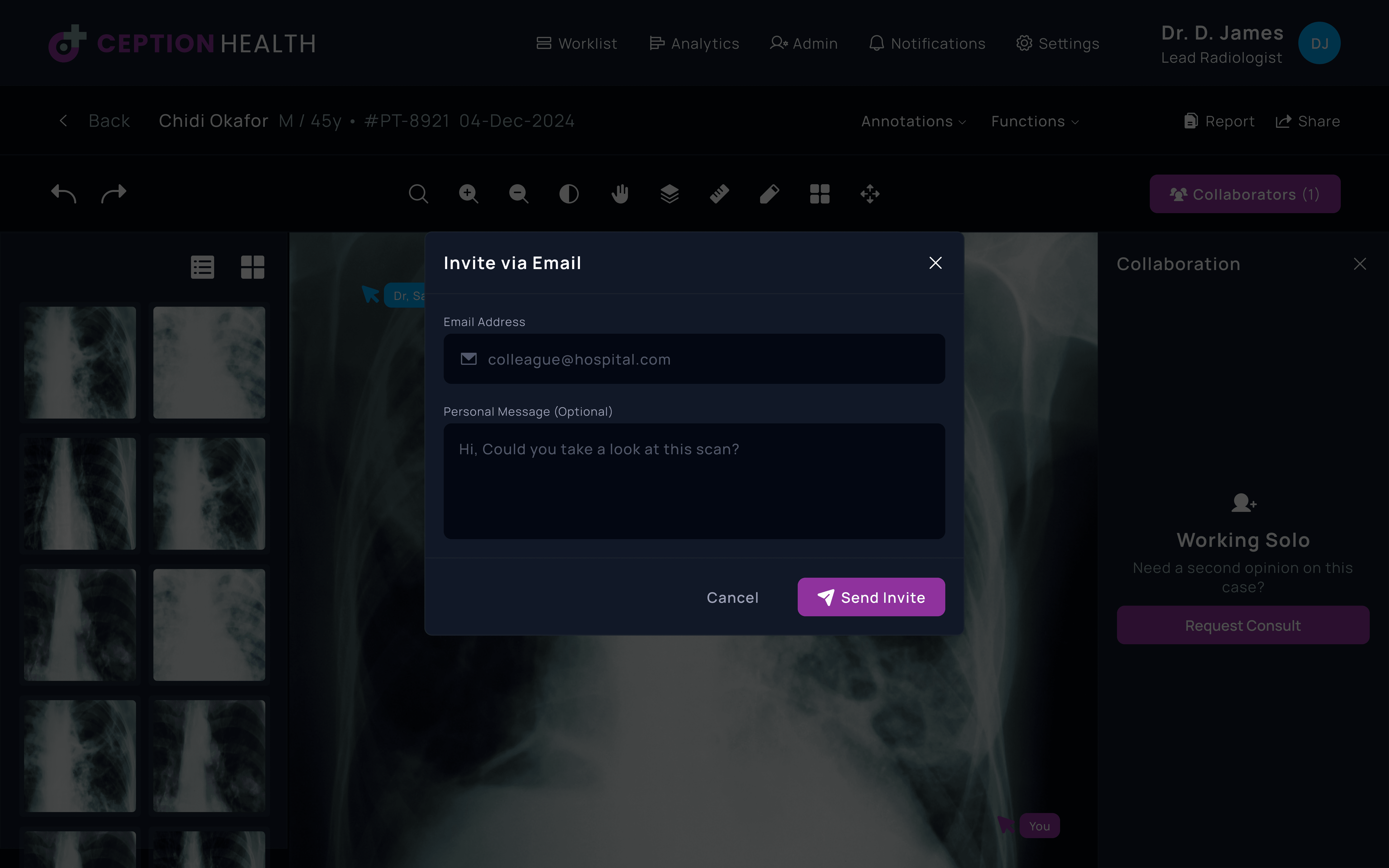
Access to Expertise: The "Invite via Email" flow allows difficult cases to be solved in minutes by remote sub-specialists, reducing the need for patient transfers.